Everything, Eco-where, AI at Once?

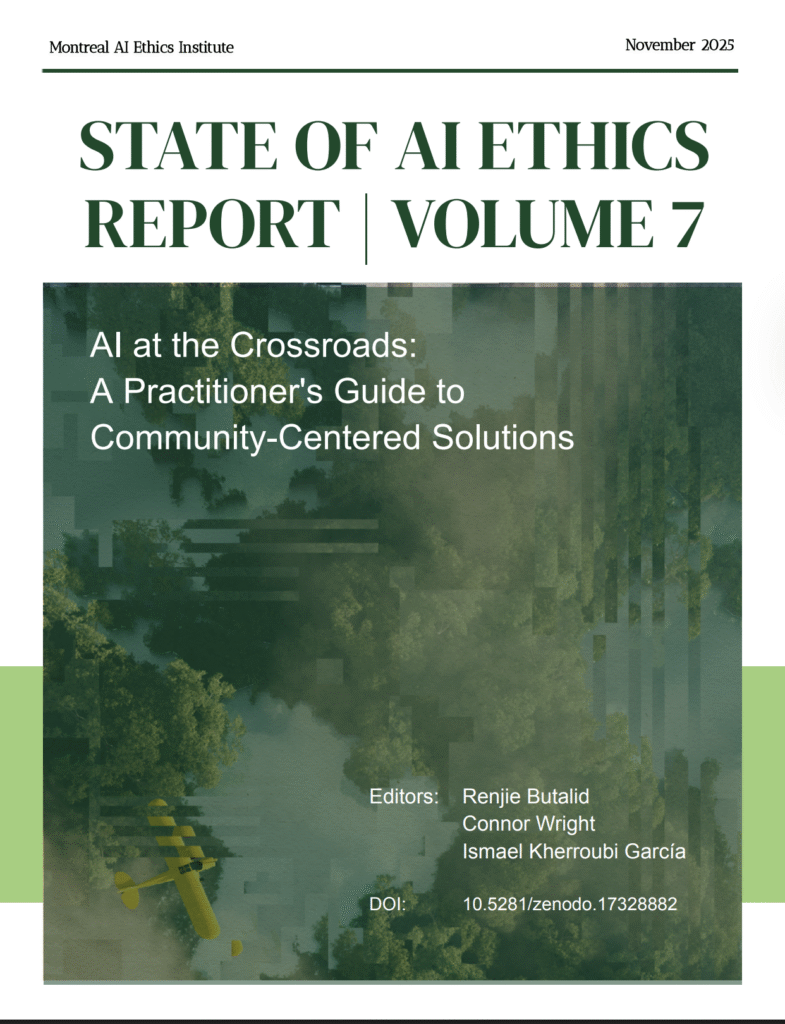
A group of five cloud shapes float across a blue background. The clouds are collages made out of close up photographs of shiny silver silicon surfaces. Beneath, the text, 'Everything, Ecowhere, AI at Once?' is printed in light text.

In this blog post, Laura Martinez Agudelo builds upon her research of visual representations of ecology and digitalisation to explore how ‘AI eco-imagery’ is portrayed. Martinez Agudelo introduces five ‘eco-digital’ visual narratives from her recent paper – including the Earth as a glowing orb and nature through screens. She then explores how AI tropes are specifically embedded in ‘eco-images’, such as through green descending code and mechanical trees. She argues that these images shape our perception of AI, environmental issues, and their potential consequences.


Eco-digital narratives are a lens through which we imagine our relationship with the environment and technology. Visual storytelling plays a huge role in shaping how natural environments and sustainability are perceived and digitally represented. These narratives show how meaning is created and allows us to understand the ways visual communication defines the intersection between both topics.

The original article (written in French) ‘Eco-digital narratives and mediated visual representations’ (Martinez Agudelo, 2025) offers a semiotic, discursive and techno-visual reflection on these narratives in online communication. The study is based on the analysis and conceptualisation of an online corpus of 100 images from Google, Yahoo, Ecosia, Bing, Lilo, Qwant and DuckDuckGo search engine results. It describes the modalities of meaning found, as well as the indices of practices and materialities represented in visual discourses dealing with ‘eco-digital’ narratives.

For studying these thematised visual representations, we should look at both the content of images and the social practices they represent. As Descola (2021) puts it, ‘we only depict what we perceive or imagine’. In the context of digital technology, this often involves depicting specific technical devices, such as phones or computers. In ecology or environmental issues, the colour green is commonly used to represent visually natural environments. 

These narratives are everywhere online, from institutional websites and social media visual identity to online (green tech) guides and e-book covers. Certain visual patterns recur, each conveying a specific story about the intersection between ‘nature’, ‘ecology’, ‘environment’ and (new) technologies. The analysis provided some insights into how we perceive and communicate sustainability. Martinez Agudelo categorises eco-digital narratives into five types, summarised below: 

1. Plants growing from technological devices 
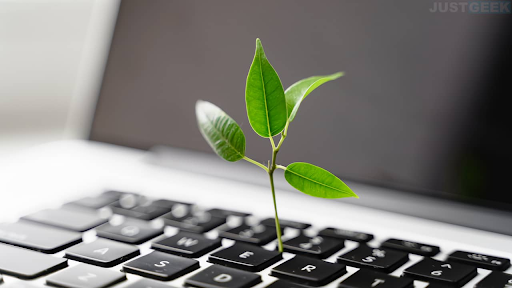
A small green leafy plant sprouting from a laptop keyboard.

One of the first patterns identified was how often plants appear intertwined with technological devices. A seedling sprouting from a laptop keyboard, a tree emerging from a smartphone screen… These images immediately convey the hopeful idea that nature and technology coexist in harmony. However, these visuals made us question whether they oversimplify reality. They can create the false impression that technology and nature integrate seamlessly without conflict or environmental cost.

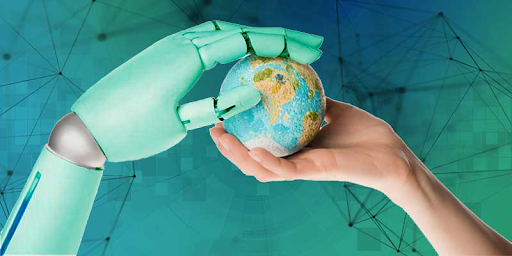
2. The Earth as a glowing orb

The Earth often appears as a glowing orb, sphere or marble cradled in human hands or glowing inside a lightbulb, a visual shorthand for ‘innovation’. But while holding the world in one’s hands feels empowering (for whom, exactly?), and sometimes it performs a gesture of care, it’s also misleading. Such imagery tends to sanitise the climate crisis, presenting it as something neat, homogeneous and manageable while airbrushing the messy, sometimes violent, and complex reality of the challenges we face (conflict minerals, e-waste dumping, rebound effect, cooling scarcity, subsea geopolitics, displacement…).   

On a green background, a the palm of a hand cups a green globe. God-like, holy radiance emanates from the globe through a glowing effect.

3. Nature through screens

A point-of-view shot of a person holding a phone. The camera is capturing an image of a tree in a forest. A sunset forest is blurred in the background.

In some images, nature is framed by tech devices: a forest captured on a phone camera, a waterfall displayed on a laptop screen. These visuals can make us reflect on our own experience. How often do we experience ‘nature’ through technology rather than directly? Are we connecting with natural environments, or simply consuming a curated digital version of it? How is this ‘nature’ already present or recognizable in the materiality of our technological devices?

4. Eco-tech icons

Then there’s the category of icons: green power buttons, recycling symbols, Wi-Fi signals entwined with leaves. These symbols are instantly recognizable and easy to understand. They communicate ‘eco-friendliness’ at a glance. However, many of them simplify or obscure the real impact of technology on the environment. They create a comforting (sometimes green washing) narrative, without addressing material realities like e-waste, water and energy consumption, or resource extraction.

A wifi symbol is in a green grassy texture, leaves fall around the symbol like confetti. The background is a light pink wall and baby blue floor.

5. Critical frames

An orange background with a mixture of back and white photography. A picture of an individual's head is cut off with a purple swirl entering her head. A laptop is also positioned near her head alongside the corner of a keyboard and mouse.

A smaller subset of analysed visuals challenges or questions the mainstream eco-digital narrative in some way, by highlighting labour and resource extraction, as well as the pitfalls of greenwashing. These images prompt us to pause and reflect, reminding us that visual storytelling is not always intended to provide comfort. Sometimes, its purpose is to urge us to confront what we would rather ignore or change our approach to a specific eco-digital issue. Recognising these dynamics helps us to identify the symbolic analogies that are currently present in the media landscape.

This analysis also highlights the inherent biases within the search engine results that were used to compile the visual corpus. However, it offers a framework for understanding how such visuals inhabit the online public sphere, facilitating the expression of diverse positions on contemporary socio-environmental contexts. Although most of the analysed images are not necessarily ‘anti-ethical’, they are often ‘anti-political’ (Romele, 2023): they reinforce a rigid divide between experts and non-experts, preventing public disagreement regarding AI development.

Images actively influence how we conceptualise technology, sustainability, and our own roles within the digital ecosystem. Whether they inspire hope, frame nature as a passive object, or challenge us to face the material consequences of innovation, they somehow dictate the boundaries of our ‘ecological imagination’. Wagener (2023) suggests that some ‘narrative frameworks’ can carry a ‘discursive anger’ that also provides a structure for the climate crisis.

What about ‘AI Eco-Imagery’?

The categories concerning the intersection of ‘ecology’ and ‘digital’ are almost identical when discussing the visual interaction between the semantic field of ecology and AI technologies. Misleading AI tropes persist, albeit with slight variations, such as the use of a green colour palette (green anthropomorphism, green robots or cyborgs, grass hands, mechanical green hands, mechanical trees and green descending code), alongside objects related to environmental issues, such as wind turbines, solar panels and backgrounds depicting urban pollution. There are even depictions of small waste-collecting or plant-seeder robots in a future where Earth has been abandoned as a trash-covered wasteland (as in WALL-E). 
Moving forward, we can engage with these images more critically: what story is this visual conveying? What is it concealing? If they are in dialogue with another image or text, what is their intrinsic relationship? ‘Eco-digital’ narratives, reproduced explicitly within environmental discourses of AI systems, illustrate the intersection of the technological and ecological spheres and perspectives. Frequently, these images reduce ecology to a mere aesthetic rather than a lived practice or experience, shaping our perception of environmental issues and their potential consequences.

Questioning media-driven visuals enables a deeper understanding of the socio-technical and environmental realities behind and within them. While some images can create a false sense of security, others can distance us from reflection or meaningful action. Paying closer attention to our relationship with the living world and the way technology and AI systems mediate these connections enables us to engage more intentionally with our immediate environmental realities.

Critical visual frameworks that confront the real tensions and conflicts between emerging technologies and ecological collapse are necessary. The Better Images of AI library provides more complex and socially aware visual representations of the entanglements between environmental discourse, social systems and the material infrastructures of devices and digital technologies.
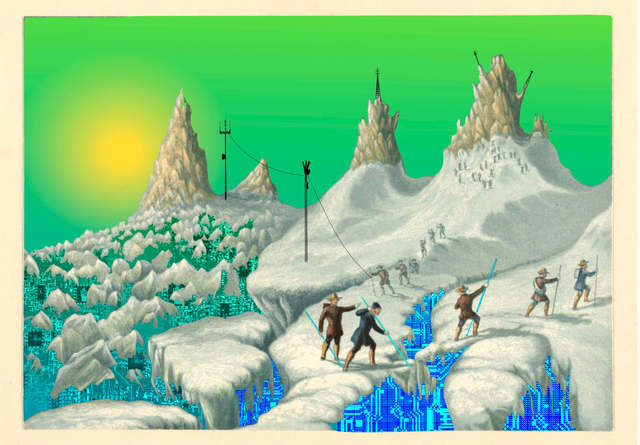
Images from the Better Images of AI library: credits at the bottom of the page

Rather than reproducing the sanitised aesthetics of clean innovation, these images expose the extractive supply chains, energy demands, labour conditions, exploitation and destruction that occur in the name of AI innovation, as well as all the planetary costs embedded in AI systems and technological progress.

Looking closely at these visual narratives reminds us that how we see, imagine or represent the world influences how we resist, act or create in it.

About the author

Black and white headshot of Laura.

Laura Martinez Agudelo is a Teaching and Research Assistant at the University Marie & Louis Pasteur – ELLIADD Laboratory. She holds a PhD in Information and Communication Sciences. Her research interests include socio-technical devices and (digital) mediations in the city, visual methods and modes of transgression and memory in (urban) art.

Image credits:

Cover image: Tania Duarte and Catherine Breslin / Better Images of AI / CC BY 4.0

Images from the Better Images of AI library, from left to right:

References

Descola, P. (2021) Les formes du visible: une anthropologie de la figuration. Paris: Seuil.

Latour, B. (2004) Politiques de la nature: comment faire entrer les sciences en démocratie. Paris: La Découverte.

Martinez Agudelo, L. S. (2025) ‘Récits éco-numériques et représentations visuelles médiatisées’, Interfaces numériques, 14(2-3). DOI: https://doi.org/10.25965/interfaces-numeriques.5583 

Romele, A. (2023) ‘Images de l’intelligence artificielle: Un punctum cæcum dans l’éthique de l’IA’, in Sebbah, F-D. and Romele, A. (eds) Imaginaires technologiques. Paris: Presses universitaires de Paris Nanterre, pp. 142–164. DOI: https://doi.org/10.4000/13orf 

Wagener, A. (2023) Blablabla: en finir avec le bavardage climatique. Paris: Le Robert.
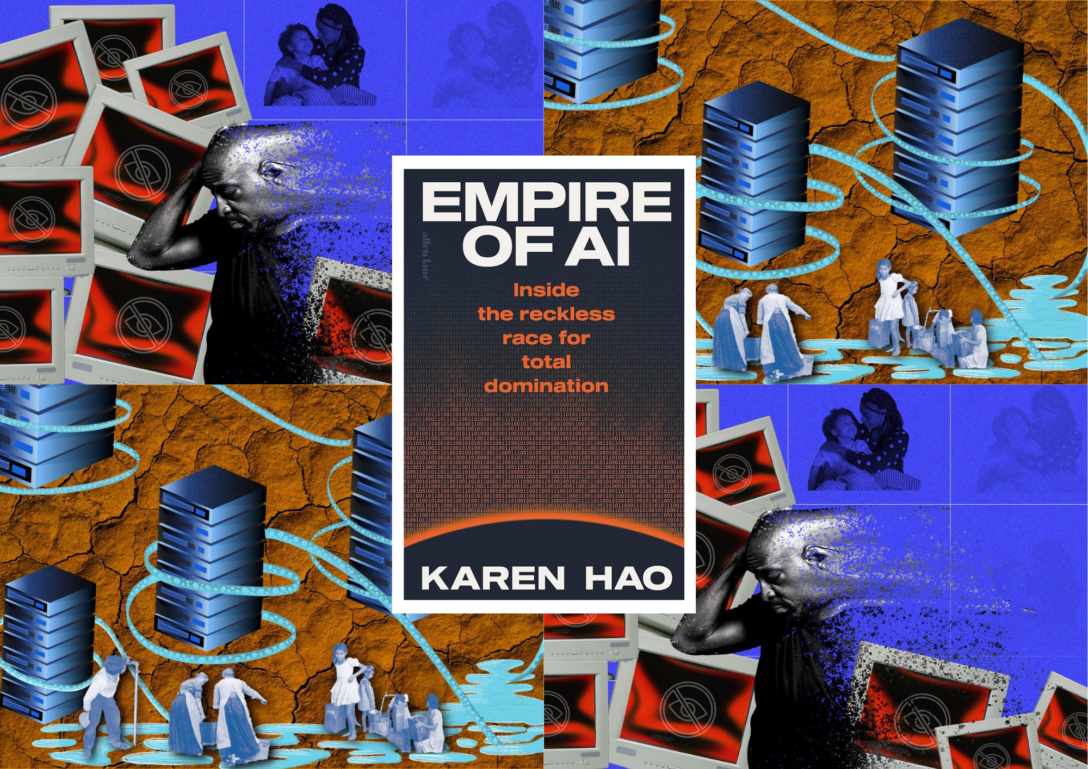
Visualising the Empire of AI with Gloria

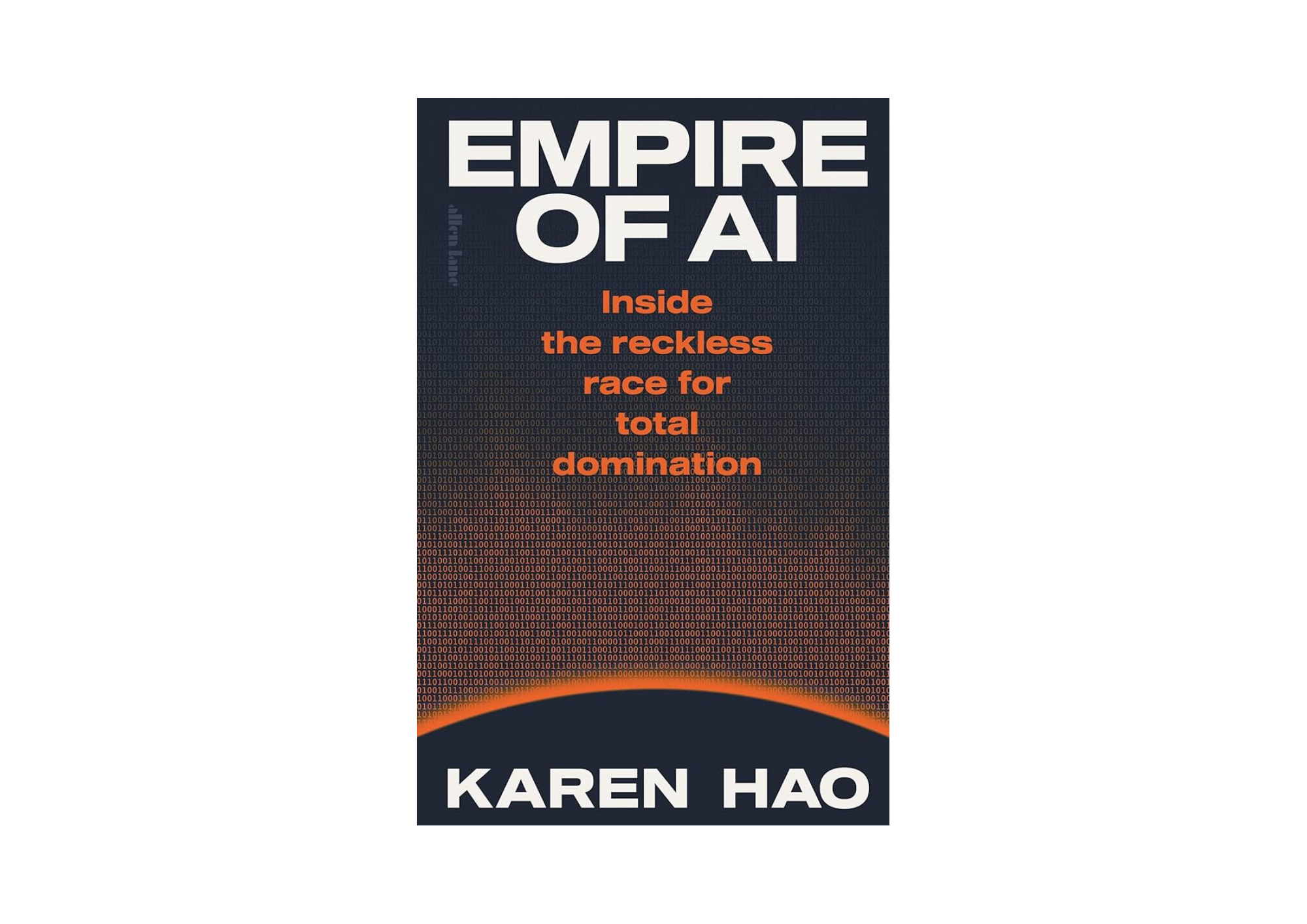
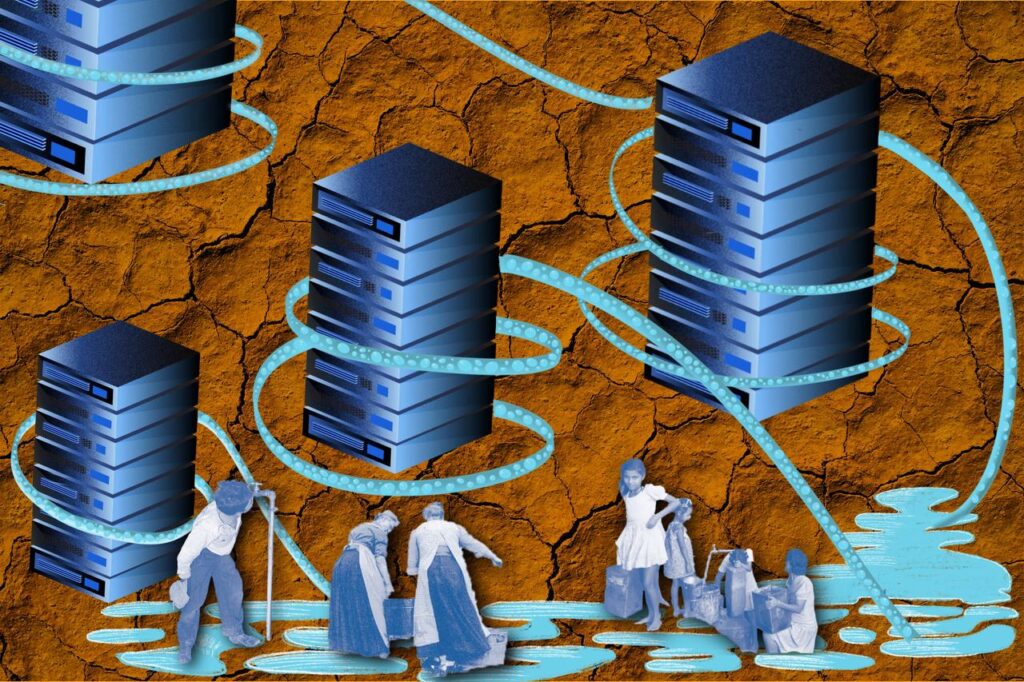
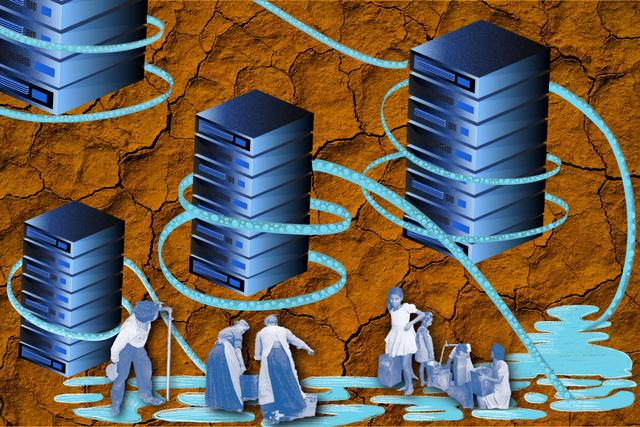
The image is split into 4 quadrants, which alternate 2 of Gloria's images. One of the images shows a man showing mental distress from constant exposure to harmful content online. His family, in the background, progressively disappears. The other image shows cooling pipes hug data servers, extracting water from a shared reservoir while people collect water from the same source, set against a background of eroded soil textures. In the middle of the 4 quadrants is the book cover of Karen Hao's 'Empires of AI'.

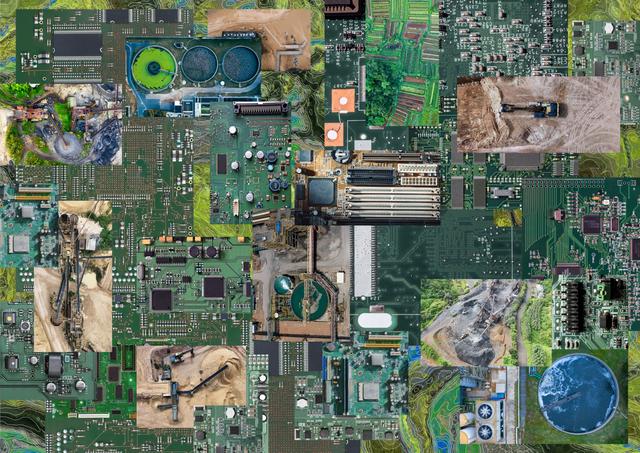
Gloria Mendoza’s images illustrate the hidden human and environmental forces which prop up the ‘Empire of AI’. After reading Karen Hao’s book, Gloria was inspired to visualise different chapters to communicate the ideas in an alternative medium. One of Gloria’s images focuses on the emotional toll faced by data workers in the Global South, inspired by a story in Chapter 2. The other image criticises the natural resources, particularly water, on which AI developments are dependent – this is also a topic discussed in depth in the book. In this blog post, we interview Gloria about her images, their inspiration, and the artistic choices made to depict technology and its impacts.

You can download Gloria’s images here in the library for free under a CC BY 4 license, so long as you correctly attribute.

“Over the years, I’ve found only one metaphor that encapsulates the nature of what these AI power players are: empires.” – Karen Hao


How did reading Empire of AI inspire your images? 

With respect to The Environmental Impact of Data Centres in Vulnerable Ecosystems, I was inspired by the book’s concise examples, something that’s hard to find when it comes to AI and automation (although see here and here). Before reading it, the environmental impacts of AI were somewhat blurry in my mind, but the book sparked my curiosity to explore how data centres are built—where they’re located, what equipment they use, how maintenance is done, and whether they can be sustainable in the long term. These questions inspired me to create this image using clear, minimal elements to illustrate the concerns I believe many people share.

The Invisible Labour Behind Content Moderation was inspired by Chapter 2 of Hao’s book. Hao tells the story of a Kenyan man who works as a content moderator and data labeller. Through constant exposure to violent and disturbing material, his mental health gradually deteriorates. Eventually, he reaches a point where he isolates himself from both his family and his community. This story reflects the reality faced by many data workers in the Global South. Several issues emerge in Hao’s account: unethical working conditions, unlawful labour practices, and the lack of adequate protection for workers.

For this illustration, I chose to narrow my focus to one aspect of this experience, the overwhelming emotional toll that this work can take. The collage aims to convey the isolation, distress, and psychological fatigue that many data workers endure. To reinforce this narrative, I incorporated hardware and digital iconography associated with sensitive content. These elements reference the technological systems that produce and circulate harmful content, while situating the worker within the broader infrastructure that makes this labor necessary.

How do you approach creating images that aim to represent AI more accurately and inclusively? 

The topic of AI often feels abstract and full of jargon, which is a major challenge for illustrators in the field. It tends to distance the public from its real-world meaning and impact. Through mixed-media collages, I found a way to shed light on what a single photograph could not capture. The tension between the organic feel of hand-drawn pixel graphics representing nature and the pixel-perfect precision of technology was carefully considered. This contrast became central to the piece.

Another challenge when visualizing these dynamics was how to represent people with dignity and accuracy. I evaluated line art versus photographs, both stock and archival, and ultimately my instincts drew me toward archival imagery. Stock photos, in this context, didn’t feel connected to the real people behind the issue. It was also important to avoid harmful tropes, such as depictions of African children collecting water, since the water shortages mentioned in the book were specific to the United States. Archival photographs, with their journalistic quality, convey a sense of authenticity and create a compelling contrast when placed alongside modern technological artefacts.

While searching for reference images of Kenyans, the results were men in tribal attire, sporting hip hop style fashion, showing off jewellery, or in extremely precarious conditions. These are representations that exacerbate negative stereotypes and narratives around Kenyans and Africans at large and do not represent the majority of the population. To tackle these results, I aim to provide as much context as possible and represent communities as accurately as possible.  

How do you think visual art can influence public understanding and perception of AI? 

Visual storytelling can help surface these hidden realities and remind us that tech infrastructures are sustained not only by code and data, but by human labour and ecosystems – Gloria Mendoza

Visual art can help the public understand this topic because creativity and conceptual thinking are powerful tools artists use to make complex ideas accessible, legible, and thought-provoking. We are living in a decisive moment where debate and action are imperative, and art helps bridge the gap between concepts that civil society may not be fully literate in and the processes of decision-making. It is important that these ideas are understood and discussed by all of us—not just technology designers and policymakers.

Illustration can make complex tech ecosystems visible. Behind datasets, algorithms, and automated systems are workers and natural environments that sustain these infrastructures. By carefully considering representation, symbolism, and context, visual storytelling can help surface these hidden realities and remind us that tech infrastructures are sustained not only by code and data, but by human labour and ecosystems.

Could you describe the visual metaphors employed in your image(s)?

Stylistically in The Invisible Labour Behind Content Moderation, I chose distortion as the primary visual metaphor. Distortion can powerfully illustrate the damage that systemic forces inflict on individuals. It suggests the breakdown of stability; a once solid subject gradually losing control, becoming increasingly vulnerable and disoriented.

What kind of images do you envision for the future representation of AI? 

I envision images that center the human experience in relation to technology; works that are explicit, relevant, and grounded in research. Representations of AI can take many tones: critical, informative, enraging, or saddening, and these are approaches artists can continue to explore while keeping their concepts rooted in figurative representation.

How has contributing to the Better Images of AI library influenced your own views on AI and its impacts? 

In the end, this project became more than just an illustration; it was a way of thinking about how technology, humanity, and ecology intersect, and how images can make invisible systems visible, sparking reflection, curiosity, and awareness.

About the artist and author

Headshot of Gloria.

Gloria Mendoza is a Colombian-American artist and designer dedicated to using visual storytelling to spark conversations around social issues and societal challenges. With a background in art direction, brand identity, and illustration, she creates research-based imagery that bridges the gap between data and public understanding. Her work invites critical thinking about equity, inclusion, and accessibility.

Cover images: Gloria Mendoza / Better Images of AI / CC BY 4.0 + book cover of Empire of AI by Karen Hao

This post is an updated version of one previously uploaded in 2025.

Visualising the Supply Chain of AI: Lone Thomasky and Bits & Bäume’s Image Collection

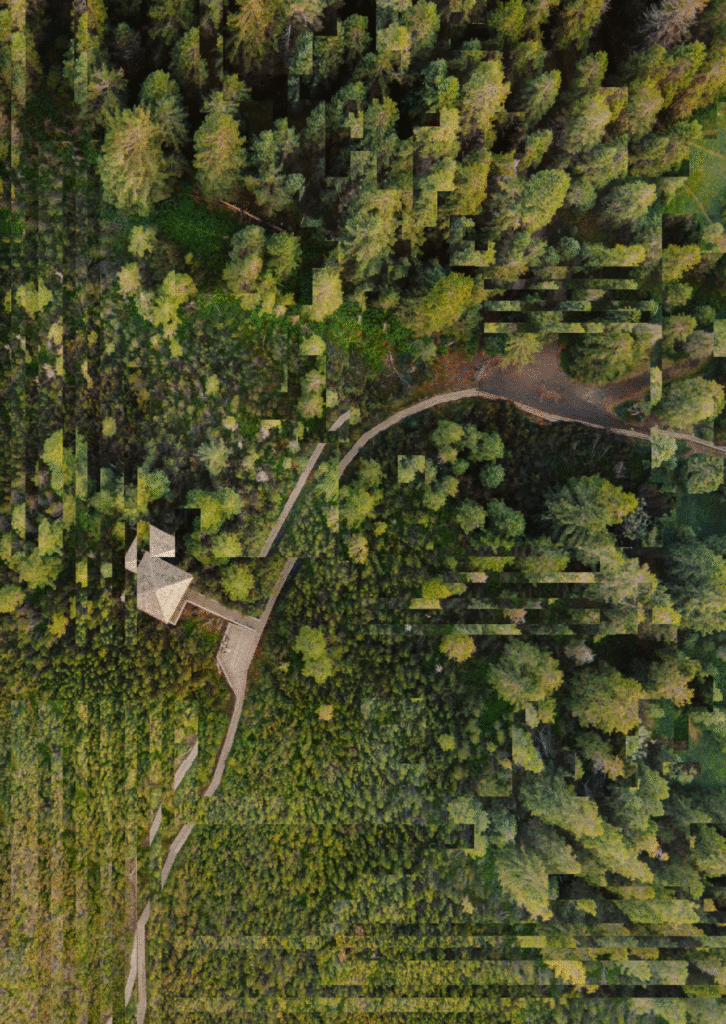
Bird's eye view photo of a small hut and a concrete path through a lush green forest. However, the image is slightly distorted by digital artefacts. In the right corner, there is a dark purple text box, with the text in white 'Visualising the Supply Chain of AI' and underneath in a white text box with black text, 'Lone Thomasky and Bits & Bäume'.

You might have noticed a new collection of images from Lone Thomasky and Bits & Bäume in the library. These images expose the realities behind the often perceived “clean”, “slick”, and “efficient” AI supply chains. Their collection shows the breakdown of environments and depletion of natural resources caused by the rapid expansion of data centres and mining of critical resources (like lithium, cobalt, and rare earth elements) which underpin (generative) AI.

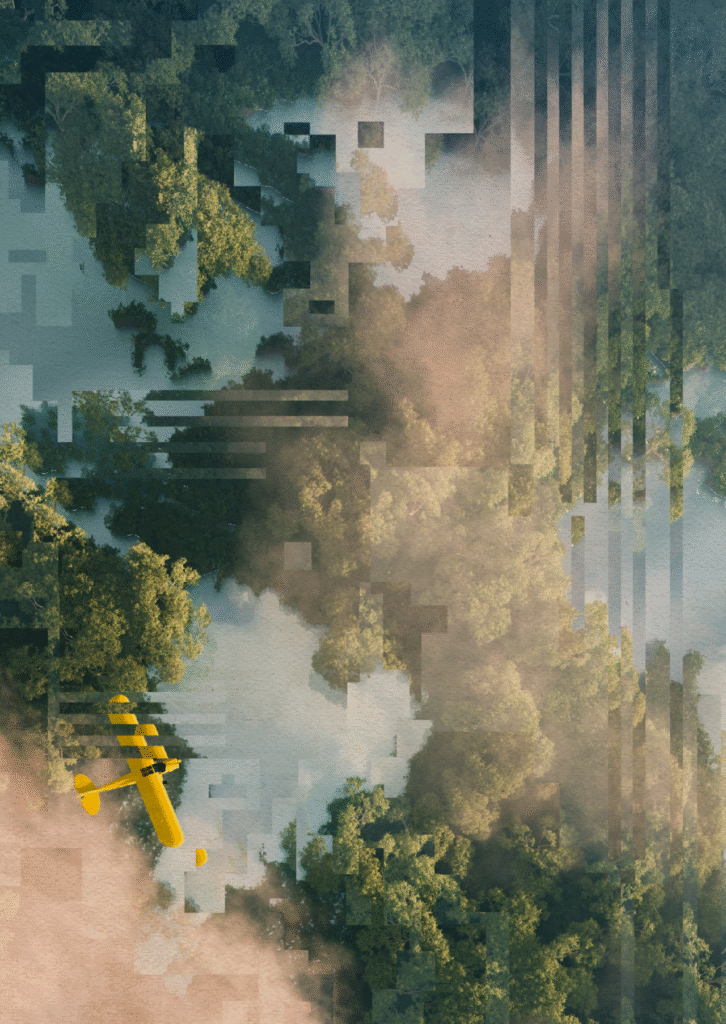
One of their images, ‘Distorted Lake Trees’ has been selected as the iconic cover image of the Montreal AI Ethics Institute 2025 State of AI Report. Below, we unpack some of the images in the Bits & Bäume collection and why they make a fitting partner organisation to Better Images of AI, particularly since our visuals aim to better communicate about the implications of AI on society, the environment forms a huge part of this.

DOWNLOAD THE IMAGE COLLECTION HERE

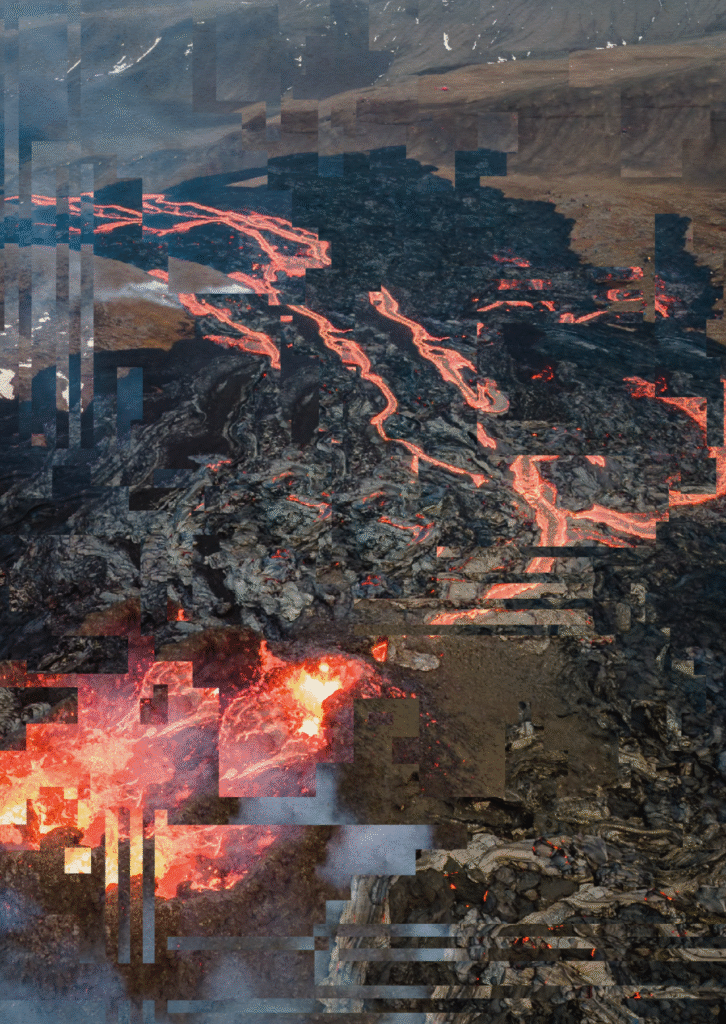
The hardware that we manufacture to underpin AI technologies and the data centres that power AI are responsible for an ever-increasing share of global electricity and water consumption, as well as being both habitat and land-intensive. Lone Thomasky and Bits & Bäume’s image collection features a series of distorted photographic images of landscapes to visualise the ecologies behind AI’s supply chain. 

AI technologies do not merely rely on “digital clouds”, “they are also physical territories anchored in mines, exploited workers, and degraded environmental ecosystems”. Frequently, visual representations of AI mask the underlying realities of how these technologies are built, overwhelmingly dependent on infrastructure, communities, and resources of the Global South. 

These images are a valuable contribution to the Better Images of AI library to counter the sleek aesthetics, magical metaphors, and luminous hardware which are often used to represent AI. Instead, these visuals help us move towards more grounded understandings that connect AI technologies with their material and environmental foundations. As such, using these images, we can improve public understanding of what is at stake when AI technologies are used, invested in, and promoted as a source for eternal good in society. 

Bird's eye view photo of a small hut and a concrete path through a lush green forest. However, the image is slightly distorted by digital artefacts.
A bird's eye view photo of a small yellow aeroplane flying over a river or lake interspersed with trees and clouds. However, the image is slightly distorted with digital artefacts.

Lone Thomasky & Bits&Bäume / Better Images of AI / CC BY 4.0

How (and why) were the images created?

Bits & Bäume was founded in 2017 by a coalition of critical tech folks, hackers, eco activists, researchers and climate justice advocates out of the conviction that digitalisation and ecological change must be reconciled. Bits & Bäume is formed and supported by NGOs and organisations across the environmental, ethics, and internet policy landscape. Some of these include the TU Berlin Ethics Lab, Chaos Computer Club, the Young Friends of the Earth Germany (BUND), German Trade Union Confederation, Institute for Ecological Economic Research, and Wikimedia Germany. Their collective activities include hosting conferences to advance academic and civil society discussions, policy work to advocate for government changes, as well as research on digital transformation and sustainability to inform law makers. 

Bits & Bäume’s first conference took place in 2018 and brought together 2,000 people from diverse backgrounds and communities. After some smaller ones, the next large conference followed in 2022 –you can find their published conference proceedings here. The images in Bits & Baume’s proceedings may look familiar, given that this was the original purpose that the images were created before being donated to the library. Having already known Lone Thomasky, Bits & Bäume worked with her to create images for the proceedings report that reflected the interdisciplinary contributions to the conference. Visualising their research was important to reach new audiences; a lot of the issues that Bits & Bäume work on are very complex, so choosing to communicate via narratives, images, and aesthetics make their topics more accessible.

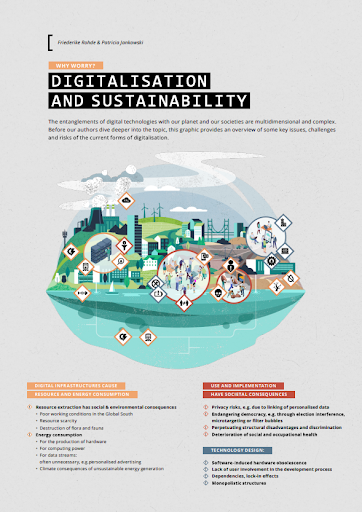
A page from Bits&Bäume's conference proceedings with a simplified illustration of urban life near the sea showing groups of people, buildings and bridges, as well as polluting power plants, opencast mining, exploitative work, data centres and wind power stations on a hill. Several small icons indicate destructive processes. This is surrounded by text boxes with coloured title blocks.

Bits & Bäume’s conference proceedings on ‘Digitalisation and Sustainability’

The importance of visualising the material realities of AI development 

AI relies on physical infrastructures like data centres to house the specific IT architecture, like servers and microchips, that are needed to train, deploy, and sustain AI applications. The number of data centres has been growing for a number of years, but the AI hype and increased investment into the technology are leading to the mass expansion of data centres, particularly concentrated in the Global South.

Just recently, Google announced that it will invest £11.29 billion to build a data centre in southern India’s Andhra Pradesh state which will contain servers, storage systems, and network equipment along with the necessary power and cooling systems to operate them. Adopting a decolonial lens, Khan argues that these takeovers of land, raw materials and exploitation of labour mimic historical European colonialism. However, instead of just blatant brutal force, the power of persuasion in the need for technological innovation and masking of exploitation create the same imbalances of power that have long exploited Global South communities. 

The proliferation of data centres are huge consumers of water which are needed to cool hot servers but also needed indirectly for producing electricity to power these facilities. Since electricity is more costly than water for data centres, companies choose to build data centres where there is cheap power, but this is often in areas where water is already a scarce resource. Bloomberg News found that around ⅔ of new data centres built or in development since 2022 in the US are in places already facing high levels of water stress. For instance, the Large Language Model (LLM) LLaMA-3, developed by Meta, consumed 22 million litres of water over 97 days. This is equivalent to the amount of water an average person in England and Wales would use over the course of 424 years.

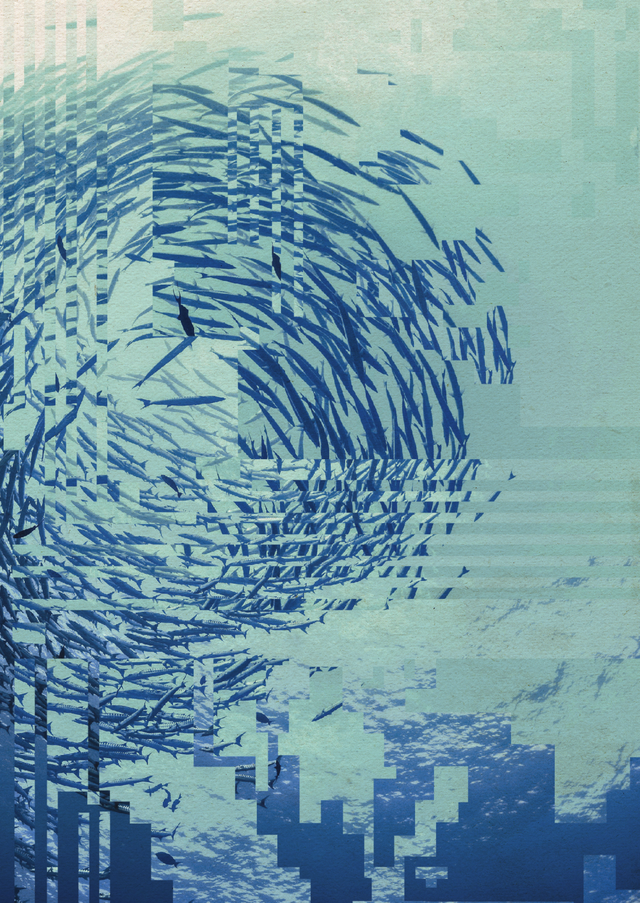
An underwater photo taken looking up to a large circular school of fish while the sun sparkles in the blue water. However, the image is slightly distorted by digital artefacts.

Lone Thomasky & Bits&Bäume / Better Images of AI / CC BY 4.0

Data centres also produce electronic waste, which often contains hazardous toxic substances, like mercury and lead, which pose serious consequences to humans and non-humans. ‘Distorted fish school’ in Lone Thomasky and Bits&Bäume’s collection points to one of the lesser considered impacts of AI on our aquatic ecosystems from contamination and pollution. 

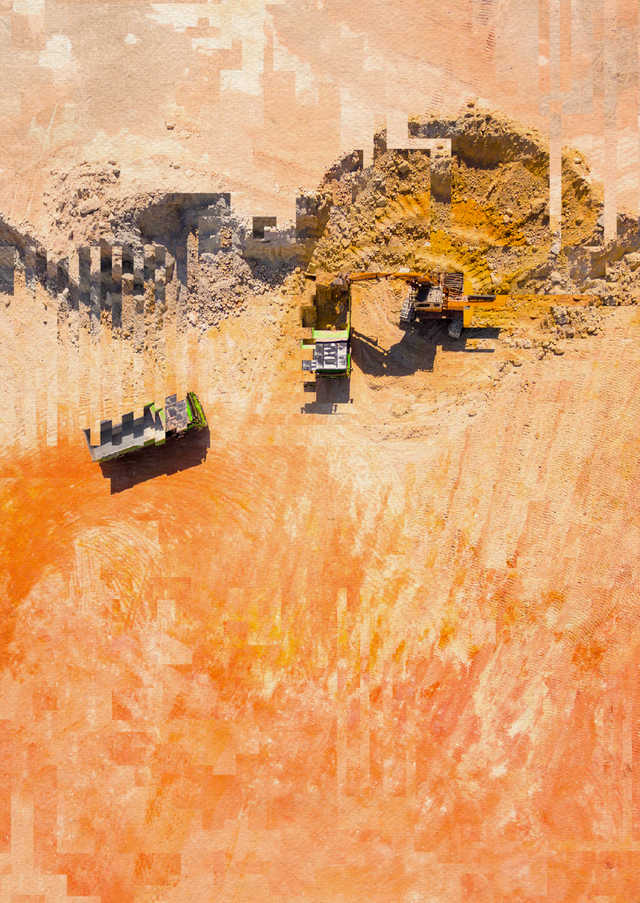
Beyond this, AI development relies on critical minerals and rare elements with unique magnetic and luminescent properties to create the microchips that are required for the processing activities required for faster, more efficient, and higher performing processing. One example is the Kolwezi copper and cobalt mine in the Democratic Republic of Congo, where Amnesty International documented forced evictions of entire communities as companies expand unsustainable mining operations for technological advancement. The mining of rare earth minerals generates large volumes of toxic and radioactive material which leave land uninhabitable. ‘Distorted Sand Mine’ in Lone Thomasky and Bits&Bäume’s collection illustrates the destructive mining and extraction practices that lurk behind the “stylish, clean, and lightweight” appearance of modern AI tools. 

A bird's eye view photo of an orange sand mine with transport lorries, but the image is slightly distorted by digital artefacts.

Lone Thomasky & Bits&Bäume / Better Images of AI / CC BY 4.0

Distortion as a Visual Metaphor for AI’s Environmental Destruction 

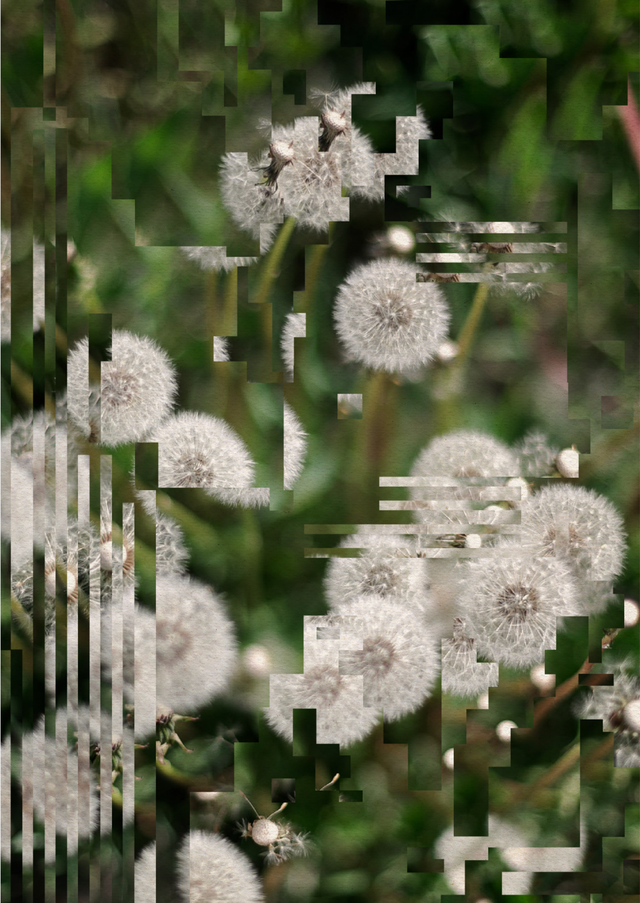
A close-up photo of some dandelions, but the image is slightly distorted by digital artefacts.

Lone Thomasky & Bits&Bäume / Better Images of AI / CC BY 4.0

Thomasky’s images all feature visual distortion, like bands, pixel shifts and fragmented overlays that disrupt the otherwise natural landscapes of trees, sand mines, and dandelions. The distortions visualise how digital infrastructures, driven by the ideology of progress and innovation, fragment both ecosystems and our perception of them. The juxtaposition between the forest greens and aquatic fish which are fractured by geometric interference draw attention to the mining, energy use, deforestation, and waste, all in the name of technological “innovation”.

A call for greater public understanding and policy shifts about the environmental impact of AI 

“The ease-of-use of generative AI interfaces and the lack of information about the environmental impacts of my actions means that, as a user, I don’t have much incentive to cut back on my use of generative AI.” Bashir (2025)

The visuals in the Better Images of AI library serve many purposes, but for this striking collection, we hope that they’ll improve public understanding of the realities of AI’s supply chain. By revealing the environmental and material realities that underpin AI, we hope to encourage more informed decision-making about whether embedding AI within infrastructures or promoting its use for ‘social good’ is truly desirable. 

By countering the clean aesthetics of typical AI imagery with distortion, these visuals invite us to think more critically about the costs of AI, particularly generative AI, which consumes substantially more natural resources than many alternative human methods or technologies. This is not only in their design and development, but even when models are deployed and used, the computing hardware that performs these operations consumes energy. For example, researchers have estimated that a ChatGPT query consumes about 5x more energy than when a simple web search is used.

Beyond improving public understanding, the use of these images in the library can also support wider advocacy efforts that Bits & Bäume have already been spearheading. The community’s 2022 conference included a set of demands aimed at changing government policy on responsible digitalisation. One of their main demands focuses on “digitalisation within planetary limits”. This concept calls for technological progress to align with the standards of climate protection, resource conservation, and biodiversity preservation. In another piece of work, Steig et al counter reductionist understandings of sustainability which narrow the policy space to optimisation and incremental solutionism – running in contradiction to sustainable futures. 

“Hackers, researchers, eco and climate justice activists alike are fighting for a livable planet for everyone and for collective freedom, because without clean water you cannot write free software and without democratic digital infrastructures you cannot enjoy healthy forests. And with people globally suffering for our way of life, no one can be happy. Therefore we have to join forces to reflect and act together. Those images contain the joint critical spirit of this endeavour.”

– Rainer Rehak, co-chair of the NGO Forum Computer Professionals for Peace and Societal Responsibility (FIfF) and co-founder of Bits&Bäume.

The image collection by Lone Thomasky and Bits & Bäume have already been featured across various media outlets and other public forums. As more people use these images, we hope that they can support those advocating for stronger policy and legal frameworks for sustainable digital transformation. While the EU AI Act includes some provisions to assess the environmental impacts of AI (such as for high-risk AI systems), these remain limited and largely dependent on self-regulation, meaning that AI companies have little incentive to improve the sustainability of their AI supply chains. 

The Montreal AI Ethics Institute 2025 State of AI Ethics Report Vol 7 is an example of one of Lone Thomasky and Bits & Bäume’s image collection ‘in the wild’. The use of ‘Distorted Lake Trees’ from this collection to represent the state of AI in 2025 is fitting, given the increasing awareness of the impacts of AI on the environment that we have seen this year. Their report aims to capture perspectives from those excluded from conversations about AI, such as voices from Canada, the US, Asia, and Africa – places where the environmental impacts of AI are also most pertinent. 

State of AI Ethics Report cover with central image of a bird's eye view photo of a small yellow aeroplane flying over a river or lake, interspersed with trees and clouds. However, the image is slightly distorted with digital artifacts.
Butalid, R., Wright, C. & Kherroubi García, I. (Eds.). (2025). The State of AI Ethics Report. Montreal AI Ethics Institute.

Part II, Chapter 7 of the Report is focussed on the environmental impact of AI, in their contribution Burkhard Mausberg and Shay Kennedy state: 

“As environmentalists, we believe that ethical AI must include ecological intelligence. That means embedding sustainability metrics into model development, mandating transparent lifecycle reporting, and aligning national AI strategies with climate goals. Governments are beginning to move in this direction but need to accelerate their oversight and avoid the race for the bottom.”Burkhard Mausberg and Shay Kennedy (Small Change Fund)

Therefore, beyond improving public understanding, these visuals can play a greater role in sparking debates about the real-world implications of AI development. The technosolutionist narratives of progress and innovation turn a blind eye to impacts on our communities, land, and environments inhabited by animals and humans.  It is important that there is a greater understanding of the environmental costs of innovation, only then can we have more meaningful conversations about the role (if any) of AI technologies in our society. 

“If you’re building or buying AI in 2026, you inherit the full anatomy: extraction, fabrication, operation, disposal. Before approving any flashy AI project, start by answering these questions: Where is it? Who owns it? What does it consume (hour by hour, basin by basin)? Who carries the residuals?” Priscila Chaves Martínez

Download Lone Thomasky and Bits & Bäume’s image collection here

Learn more about Bits & Bäume here

Cover image: Lone Thomasky & Bits&Bäume / Better Images of AI / CC BY 4.0